About Bronzewing Birding Services

- Michael Ramsey - Bronzewing Birding Services
- North East, Victoria, Australia
- Blog of Bronzewing Birding Services, which provides news and updates on birdwatching in North East Victoria. For more information go to the website at: http://www.bronzewingbirdingservices.com
Monday, July 18, 2011

Thursday, June 30, 2011
Australian Painted Snipe
Awesome Picture of an Australian Painted Snipe pair at Coreen, NSW
taken on the 25/4/11 by Chris Tzaros, thanks Chris.


taken on the 25/4/11 by Chris Tzaros, thanks Chris.


Thursday, March 17, 2011
Saturday, February 26, 2011
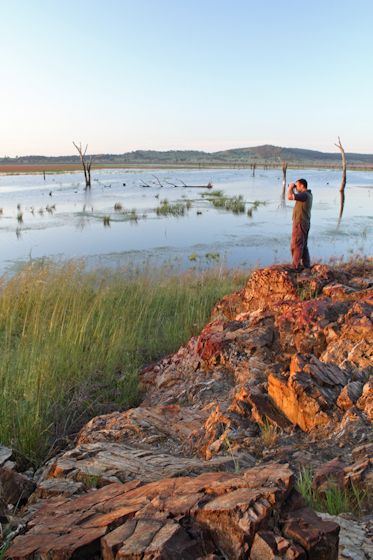
Dowdle Swamp (again)
An hour or so at the north west side of Dowdle Swamp this afternoon yielded 45 species. Best of which the Bush Stone-curlew which has been seen on and off ,was back again. A Western Gerygone was also a first sighting for here.
There are many ducks breeding, mostly Grey Teal and also Hardhead. It worries me what will happen to all these birds when duck shooting starts in a few weeks.
Saturday, February 19, 2011
Quail at Home (Wilby)
It has been a fantastic year for quail. I have recorded 4 species at home in the paddocks behind the garden, and even Little Button-quail in the garden itself.
A walk this evening along Martin Street behind home was sensational for quail. Martin Street is the most northern street in Wilby and has a few houses but most of the land in wheat and canola paddocks. Many Stubble Quail were calling and flushed. Two Brown Quail also seen. One Little Button-quail was near the corner with the Yarrawonga Rd. Then the best bird of all, a female Red-chested Button-quail. I had been hearing this species on and off over the last few months at night, never seen one though. Then I flushed one from the weedy edge of a canola crop. Excellent!!!

Spotted Harrier and Nankeen Night Herons also good sightings for the day.
A walk this evening along Martin Street behind home was sensational for quail. Martin Street is the most northern street in Wilby and has a few houses but most of the land in wheat and canola paddocks. Many Stubble Quail were calling and flushed. Two Brown Quail also seen. One Little Button-quail was near the corner with the Yarrawonga Rd. Then the best bird of all, a female Red-chested Button-quail. I had been hearing this species on and off over the last few months at night, never seen one though. Then I flushed one from the weedy edge of a canola crop. Excellent!!!

Spotted Harrier and Nankeen Night Herons also good sightings for the day.
Sunday, February 13, 2011
Ovens Valley
I have a tour in a week around the Bright-Mt Buffalo area so I thought it would be a good idea to check out the area before it started.
Unfortunately my camera card died so I don't have any pictures.
I checked out Mt Buffalo, highlights being a Pilotbird calling at Lake Catani and Red-browed Treecreeper at Rollasons Falls. Around Bright Satin Bowerbird, Yellow-tailed Black-Cockatoo and Gang-gang Cockatoo were some nice birds.
I finished off the day at Myrtleford Sewage Ponds and nearby at Reform Hill State Forest, a Leaden Flycatcher at the latter. At the sewage ponds a nice selection of ducks and some drier forest birds in the box-stringybark forest behind the ponds such as Fuscous Honeyeater, White-throated Gerygone, Horsfield's Bronze-Cuckoo and Dusky Woodswallow.
92 species for the day.
Unfortunately my camera card died so I don't have any pictures.
I checked out Mt Buffalo, highlights being a Pilotbird calling at Lake Catani and Red-browed Treecreeper at Rollasons Falls. Around Bright Satin Bowerbird, Yellow-tailed Black-Cockatoo and Gang-gang Cockatoo were some nice birds.
I finished off the day at Myrtleford Sewage Ponds and nearby at Reform Hill State Forest, a Leaden Flycatcher at the latter. At the sewage ponds a nice selection of ducks and some drier forest birds in the box-stringybark forest behind the ponds such as Fuscous Honeyeater, White-throated Gerygone, Horsfield's Bronze-Cuckoo and Dusky Woodswallow.
92 species for the day.
Sunday, February 6, 2011
Boweya Forest in February
A late afternoon visit to Boweya Forest was very rewarding with 45 species. Not as many birds as other visits, but numbers and species or birds are usually down in the late summer.
Highlights of this visit were a male Painted Button-quail flushed, White-backed Swallows, Hooded Robin and Rainbow Bee-eaters.
Highlights of this visit were a male Painted Button-quail flushed, White-backed Swallows, Hooded Robin and Rainbow Bee-eaters.
Swifts at home in Wilby
It hasn't been a cracking year from swifts though I have had a few sightings this season. A couple of note over the last few days were 31 White-throated Needletails over home at Wilby on the 06/02/2011 and one Fork-tailed Swift, the first for a long time over home as well today.
There has been plenty of humid unsettled weather with all the rain so far this year, so maybe more to come.
There has been plenty of humid unsettled weather with all the rain so far this year, so maybe more to come.
Friday, January 28, 2011
Budgerigar again at Wilby
A few day ago I saw a young Budgerigar out the front of home at Wilby. Today it was around again, at the back of the garden near the dam.
A nice walk at the bushland reserve this evening also produced over 40 species. Just the usual resident birds in late summer, but always nice to check my local patch.
 |
| Australian Wood Duck on the dam at the Wilby Bushland Reserve |

Thursday, January 27, 2011
Spotted Harrier
It has been ages since I have had a good view of a Spotted Harrier. They have been very scarce this season. In the drought years of 2007, 2008 and 2009 they were regularly seen around home at Wilby in the surrounding paddocks.

The pet guinea fowl today at home were carrying on, this time for real as a young Spotted Harrier was overhead trying to catch some of their chicks.
It was unsuccessful in its attempt but it was till good to see this species again, and at home.


The pet guinea fowl today at home were carrying on, this time for real as a young Spotted Harrier was overhead trying to catch some of their chicks.
It was unsuccessful in its attempt but it was till good to see this species again, and at home.

Warby Ranges and Winton Wetlands
A great route through my local area is a trip to the Warby Ranges (or Warbies) and then by Winton Wetlands. Over 100 species can be comfortably seen in a morning and today was no exception.


I started the day off at Granite Track, one of the best spots in the Warbies, as it is on the edge of the park attracting a variety of birds. Highlights here this morning were a young Black-eared Cuckoo, Peregrine, Painted Button-quail, Shining Bronze-Cuckoo, breeding Hooded Robin and Yellow-faced Honeyeaters. The honeyeaters are quite odd, usually a winter visitor, some birds may have stayed the summer in the ranges due to the wet and cooler conditions this year.

Granite Track in the lovely early morning light.
After Granite Track, Adams Road, where seven Turquoise Parrots were found, always great to see as well as calling Horsfield's Bronze-Cuckoo and over 20 bush species.
Winton Wetlands (the old Lake Mokoan) are still very full. I stopped first at the duck pond area, Grey-crowned Babblers here were a good surprise. This is second record if this species at the wetlands, they may be recolonizing after the lake was drawn down. Over 50 species here including breeding Darters, ducks, Horsfield's Bushlark and Crested Shrike-tit.
Next stop was at the boat ramp area were there was over 60 species found. Highlights were a Fuscous Honeyeater, usually more in the nearby hills, Pied Cormorant, Musk Duck, Brown Quail calling, White-bellied Sea-eagle and Diamond Firetail.

White-breasted Woodswallow at the boat ramp.

Winton Wetlands looking beautiful.
Wednesday, January 26, 2011
Balldale-Coreen (southern NSW)
Australia Day! What no better way to spend it than birdwatching. Teamed up today with my great birding pal, Matt Weeks to explore the area around Balldale-Coreen, north of Howlong and Corowa in southern NSW.


We were not sure what we would find but were very pleased to find many wetlands, full of birds after the recent (and continuing) good rains through the area. First stop was at Howlong on the Murray were an Azure Kingfisher and Dollarbirds were a good sighting. Next stop was at Kentucky State Forest, a Box-Cypress Pine Forest which is good for dry forest species. We were very happy to find two Diamond Doves here, one of which was seen well. Quite south of their usual range here.
Oil Tree Lagoon west of Balldale was also very full but hard to get a good look at with lots of Red Gum saplings around the edges. However some Plumed Whistling-Ducks and breeding Pink-eared Ducks here were a nice sighting (we saw many through the whole day) as well as many waterbirds and usual species here such as Apostlebird and Grey-crowned Babbler.

Plumed Whistling-Duck.
We passed some impressive wetlands along Mahonga Lane, were there were hundreds of Whiskered Terns over the swamps, breeding Black-winged Stilt and Red-kneed Dotterel as well as more Plumed Whistling-Ducks and many ducks of most expected species.

Wetlands on Mahonga Lane.

Breeding Black-winged Stilt.
Lonesome Pine State Forest a few kilometres from Mahonga Lane was fairly quiet, the usual Chestnut-rumped Thornbills here.
The day finished off near Lonesomw Pine were there was another impressive wetland a kilometre or so across, more Whiskered Terns here, Brolga, flushed Brown Quail and more waterbirds. We will definately visit this area again to see what else we can find and what changes there are.
111 species for that day.
Budgerigar at Home
I have seen Budgerigars twice at home (in Wilby) before but was still surprised to find one today. It was a young bird perched in bushes out the front of the neighbours house. It may have been an escaped pet, but was green and flew quite well over home and out towards the north. Sadly it was too dark to take any pictures. I will have to keep a look out to see if more are around home.
Tuesday, January 25, 2011
Eildon Area
The Robin Rednecks twitchathon team (of which I am part of) last year visited the Eildon/Snobbs Creek area as part of the race, targeting wet forest birds. As twitchathons are always rushed events I drove down to this area to spend the night and see some birds at a more leisurely pace.


I managed to see or hear most wet forest species I was looking for such as Superb Lyrebird, Red-browed Treecreeper, Lewin's Honeyeater, Rufous Fantail, Bassian Thrush, Yellow-tailed Black-Cockatoo, Olive Whistler and Cicadabird. The big bird for the trip was a Sooty Owl that was heard calling around 10pm at Morris Lookout, where I camped.

View over the upper Goulburn Valley looking down over Eildon from Morris Lookout.
The following day some time was spent around the Lake Eildon Dam wall and Eildon township. Wonga Pigeon a nice sighting here.

It was quite cold on the Lake Eildon dam wall.
On the way home I walked the rail trail bridge over Lake Eildon at Bonnie Doon, a nice group of cormorants here, including a Pied which are fairly rare in North East inland waters. The lake is also filling up well after recent rains and would be 75% full.

View of Lake Eildon from Bonnie Doon.
120 species for the couple of days.
Saturday, January 22, 2011
Barmah-Mathoura
Earlier in the year I went to the Mathoura Reedbeds at the end of my northern Victoria trip. I was very impressed and wanted to visit again and as I was still on holidays made the trip again.


On the way over from Wilby I was very surprised to find a Bush Stone-Curlew by a small Red Gum woodland near Nathalia. Close to Mathoura, just over the Murray River near Barmah were a pair of Emu feeding by the road and many Long-billed Corellas.
As soon as I arrived at the reed beds (5 minutes east of Mathoura) the excitement began right away. I could hear an Australasian Bittern booming and hundreds of ibis, Great Egret and Nankeen Night Heron were streaming overhead, probably heading out into the flooded forests to feed from their nest sites. A few Intermediate Egrets were also seen and an Australian Little Bittern was also heard giving its weird croaking call. Bush birds were about as well with Southern Whiteface, Fan-tailed Cuckoo and White-winged Triller highlights. Great Crested Grebes which were here last time, were also still about, still with young. Swamp Harriers, Dusky Woodswallows, Little Black and Little Pied Cormorants were also some other birds breeding.

Intermediate Egret (red bill) and young Swamp Harrier in the background.

Royal Spoonbills were also breeding at the reedbeds.
A drive to Picnic Point was worth it for a female Leaden Flycatcher in willows by the Murray River. By Pollys Bridge at Mathoura itself, Dollarbird, Red-browed Finch, Buff-rumped Thornbill, Crested Shrike-tit and Azure Kingfisher were some nice sightings.

Red-browed Finch on seeding grasses.

Immature Dollarbird. Note the dull, not red bill.
On the way I stopped at Barmah and had a great, close sighting of a Nankeen Night Heron of which I managed some great photos.

This Night Heron was very close.
100 species exactly for the morning.
Friday, January 21, 2011
Dowdle Swamp

Dowdle Swamp (just 5 minutes from home) just keeps better and better. With so rain lately the level of the swamp keeps getting topped up, just as it starts to dry out. There has been much breeding, ducks in particular, many Grey Teal (below) have ducklings.

This visit was no different, 50+ species in an hour and a half. As usual I went to the area on the north west side were the swamp overflows into a large grassy wetland, with the Red Gum swamp, behind.
The usual species here today, such as Grey Teal (hundreds), Black Duck, Australasian Grebe, Wood Duck, White-necked and White-faced Herons. Three Plumed Whistling-Ducks (having such a good season) were also found today and 2 Nankeen Night Herons were also good to see.
Duck shooting season starts in March, it will be interesting to see how the ducks respond, hopefully by clearing off.
Friday, January 14, 2011
Western Treatment Plant, Werribee
I was visiting family in Melbourne and could not pass an opportunity to visit the Western Treatment Plant. There have been great sightings of late, Stilt Sandpiper, Ruff, Long-toed Stint, birds people generally only dream about seeing.


Unfortunately I choose a bad day to visit. There had been over 50mm of rain the night and day before and many of the ponds (around T-section and western lagoons) that these waders have been seen on were full. Part of the plant were closed as well so I couldn't even get into some areas. However I could still manage to see the western lagoons and a large flooded paddock nearby (below).

These ponds were quite flooded after recent rains.

The flooded paddock where I saw the Ruff and a Pectoral Sandpiper.
I spent around 4 hours looking for the Stilt Sandpiper in particular, but could not manage to see it. Consolations however were two Pectoral Sandpipers and a Ruff. Also many terns, Caspian, White-winged Black, Little, Common and Whiskered. Not birds I see that often in North East Victoria. There were many waders as well as expected (below).

Red-necked Stint and Curlew Sandpiper.

Red-necked Stint, many were orange flagged.
70+ species for the afternoon.
Wednesday, January 12, 2011
Dave's Hill, Winton Wetlands, Chesney Vale Hills
It has been very humid and raining of late, still I thought I'd brave the weather and head out this morning to Dave's Hill and the Winton Wetlands. It was quite dull and windy, especially at the Winton Wetlands but I still managed to see some good birds.
Dave's Hill near Thoona is a mixture of grassland, granitic woodland with Blakley's Red Gum and creek woodland with Grey Box. It alwaus has quite a good mix of species.Just after I arrived I noticed quite a few White-throated Needletails over Mt Meg. The humid and tropical conditions this week mean great conditions for this species. There were approximately 120 in the flock. Other interesting sightings here were 2 Rainbow Bee-eaters, the reliable Southern Whiteface, Red-capped Robin, and lots (10) Diamond Firetails. Three Horsfield's Bronze-Cuckoos were also a surprise. Red-browed Finches were here too. 47 species here.
Next stop was the Land for Wildlife Swamp along the Glenrowan-Boweya Rd. Australian White Ibis were breeding here last year and a few nests were left. Also interesting to see breeding were Little Black Cormorant and White-necked Heron, with three young. It has been a great season for White-necked Herons. Three Cockatiels along the road also great to see.

I moved onto Lake Mokoan/Winton Wetlands (above) and stopped at the duck pond, on the north east side of the wetlands first. Straight away I noticed a cloud of Needletails overhead. Over 200 birds, great numbers and a spectacular sight. It was very windy at the duck pond but I did notice Darters with a nest and many Stubble Quail were calling. A Black Kite was also noticed along the Lake Mokoan Rd (below) where it is regularly seen.

I headed off nest to the boat ramp area which was quite windy as well with showers coming over, which you can see below. A White-bellied Sea-Eagle was breifly seen, a single Pink-eared Duck, White-breasted Woodswallows, Golden-headed Cisticolas, Peregrine Falcons (which I had a good morning for, also at Dave's Hill) and a Brown Quail calling were highlights. The wetlands are still very full and with the rain so far this week, and more forecast, it will only stay that way.


Finally made my way up into the low hills behind the Winton Wetlands to the Chesney Vale Block of the Mt Meg Nature Conservation Reserve (same reserve as Dave's Hill, but abouyt 5km to the south west). I have known of this site for a while but have not really explored it till a few months ago. It's a great little spot for bush birds and today with no exception with Painted Button-quail, Turquoise Parrot, Speckled Warbler, Western Gerygone, Buff-rumped Thonrbill and Red-capped Robin some highlights.
100 species exactly for the day. A great mix of bushland and wetland species.
It is pouring with rain outside now so I think I made it home just in time.
Dave's Hill near Thoona is a mixture of grassland, granitic woodland with Blakley's Red Gum and creek woodland with Grey Box. It alwaus has quite a good mix of species.Just after I arrived I noticed quite a few White-throated Needletails over Mt Meg. The humid and tropical conditions this week mean great conditions for this species. There were approximately 120 in the flock. Other interesting sightings here were 2 Rainbow Bee-eaters, the reliable Southern Whiteface, Red-capped Robin, and lots (10) Diamond Firetails. Three Horsfield's Bronze-Cuckoos were also a surprise. Red-browed Finches were here too. 47 species here.
Next stop was the Land for Wildlife Swamp along the Glenrowan-Boweya Rd. Australian White Ibis were breeding here last year and a few nests were left. Also interesting to see breeding were Little Black Cormorant and White-necked Heron, with three young. It has been a great season for White-necked Herons. Three Cockatiels along the road also great to see.

I moved onto Lake Mokoan/Winton Wetlands (above) and stopped at the duck pond, on the north east side of the wetlands first. Straight away I noticed a cloud of Needletails overhead. Over 200 birds, great numbers and a spectacular sight. It was very windy at the duck pond but I did notice Darters with a nest and many Stubble Quail were calling. A Black Kite was also noticed along the Lake Mokoan Rd (below) where it is regularly seen.

I headed off nest to the boat ramp area which was quite windy as well with showers coming over, which you can see below. A White-bellied Sea-Eagle was breifly seen, a single Pink-eared Duck, White-breasted Woodswallows, Golden-headed Cisticolas, Peregrine Falcons (which I had a good morning for, also at Dave's Hill) and a Brown Quail calling were highlights. The wetlands are still very full and with the rain so far this week, and more forecast, it will only stay that way.


Finally made my way up into the low hills behind the Winton Wetlands to the Chesney Vale Block of the Mt Meg Nature Conservation Reserve (same reserve as Dave's Hill, but abouyt 5km to the south west). I have known of this site for a while but have not really explored it till a few months ago. It's a great little spot for bush birds and today with no exception with Painted Button-quail, Turquoise Parrot, Speckled Warbler, Western Gerygone, Buff-rumped Thonrbill and Red-capped Robin some highlights.
100 species exactly for the day. A great mix of bushland and wetland species.
It is pouring with rain outside now so I think I made it home just in time.
Monday, January 10, 2011
Chiltern and Rutherglen
This morning's visit was over to Chiltern and Rutherglen to look at some of the tried and true spots such as Bartley's Block, the dams at Chiltern and the swamps around Rutherglen. It had rained the night before which usually makes for fresh conditions, but it was quite humid and cloudy.
I started off at Bartley's Block, which was a bit quiet to start off with, but the bird action started happening eventually. Near the gate a Turquoise Parrot was feeding in a open grassy area, Spotted Pardalotes were calling overhead and a female Red-capped Robin was perched on a dead log. Further into the block a White-throated Gerygone (reliable spot here) was seen in a Golden Wattle, chasing Western Gerygones. A Speckled Warbler also seen nearby as well as Buff-rumped Thornbills. These last two species are fairly recent arrivals to the block, they moved here a year or so back during the drought. Black-chinned and Yellow-tufted Honeyeaters could also be heard calling. Back near the gate a Shining Bronze-cuckoo was seen and a White-browed Scrubwren was in an old oleander bush, my first record for the park.
47 species here.

I moved on to No.1 Dam (above) which was bit quiet birdwise. The dam itself is still very full, with very few muddy edges to attract some birds. A White-backed Swallow here was a highlight, a male Crested Shrike-tit came quite close and the summer resident White-breasted Woodswallows were good to see. I continued on to No.2 dam which was even quieter. At the gate a Jacky Winter (below) pair and their fledgling (below), just out of the nest were great to watch. The fledgling was very tame so I could get very close for a picture. Four Diamond Firetails, and three Dollarbirds were also highlights here.

Jack Winter adult, Chiltern No.2 Dam

Jacky Winter fledgling, Chiltern No.2 Dam
Moving on towards Rutherglen the swamps here were a lot better than the dams at Chiltern with lots of muddy edges, reeds and rushes around the edges. At the swamp I call Quarry Swamp on Kings Road, Plumed Whistling-ducks were breeding. Two pairs seen with 10 and 11 ducklings each. This was excellent to see (below). Also breeding in the swamps around Rutherglen were Hoary-headed and Australasian Grebes, Grey Teal, Hardhead, Black-winged Stilt and a Red-kneed Dotterel with two chicks. Great to see so much breeding activity happening. Two Grey-crowned Babblers were also seen near Rutherglen near Ready Rd, White-backed Swallows again along Great Southern Rd and two Cockatiels near Kings Rd, also good observations.

I continued on with the morning with stop at Lake Moodemere. Dollarbirds, Red-browed Finch and Western Gerygone highlights here. This spot is also reliable for Swamp Harrier with one seen on a reed bed. I also had a look at Black Swamp (Boorhaman East) which looks great, more Dollarbirds here, many ducks, Sacred Kingfishers, Eurasian Coots, Dusky Moorhen and Purple Swamphens. On the way home had I had a quick look at the swamp on Jones Swamp Rd (Boorhaman North)which is near enough done for the season, most of the water is now gone. An Apostlebird, which have a small population in North East Victoria was also spotted near Brimin Road in Boorhaman North. A great way to finish off the morning.
108 species all up!
I started off at Bartley's Block, which was a bit quiet to start off with, but the bird action started happening eventually. Near the gate a Turquoise Parrot was feeding in a open grassy area, Spotted Pardalotes were calling overhead and a female Red-capped Robin was perched on a dead log. Further into the block a White-throated Gerygone (reliable spot here) was seen in a Golden Wattle, chasing Western Gerygones. A Speckled Warbler also seen nearby as well as Buff-rumped Thornbills. These last two species are fairly recent arrivals to the block, they moved here a year or so back during the drought. Black-chinned and Yellow-tufted Honeyeaters could also be heard calling. Back near the gate a Shining Bronze-cuckoo was seen and a White-browed Scrubwren was in an old oleander bush, my first record for the park.
47 species here.

I moved on to No.1 Dam (above) which was bit quiet birdwise. The dam itself is still very full, with very few muddy edges to attract some birds. A White-backed Swallow here was a highlight, a male Crested Shrike-tit came quite close and the summer resident White-breasted Woodswallows were good to see. I continued on to No.2 dam which was even quieter. At the gate a Jacky Winter (below) pair and their fledgling (below), just out of the nest were great to watch. The fledgling was very tame so I could get very close for a picture. Four Diamond Firetails, and three Dollarbirds were also highlights here.

Jack Winter adult, Chiltern No.2 Dam

Jacky Winter fledgling, Chiltern No.2 Dam
Moving on towards Rutherglen the swamps here were a lot better than the dams at Chiltern with lots of muddy edges, reeds and rushes around the edges. At the swamp I call Quarry Swamp on Kings Road, Plumed Whistling-ducks were breeding. Two pairs seen with 10 and 11 ducklings each. This was excellent to see (below). Also breeding in the swamps around Rutherglen were Hoary-headed and Australasian Grebes, Grey Teal, Hardhead, Black-winged Stilt and a Red-kneed Dotterel with two chicks. Great to see so much breeding activity happening. Two Grey-crowned Babblers were also seen near Rutherglen near Ready Rd, White-backed Swallows again along Great Southern Rd and two Cockatiels near Kings Rd, also good observations.

I continued on with the morning with stop at Lake Moodemere. Dollarbirds, Red-browed Finch and Western Gerygone highlights here. This spot is also reliable for Swamp Harrier with one seen on a reed bed. I also had a look at Black Swamp (Boorhaman East) which looks great, more Dollarbirds here, many ducks, Sacred Kingfishers, Eurasian Coots, Dusky Moorhen and Purple Swamphens. On the way home had I had a quick look at the swamp on Jones Swamp Rd (Boorhaman North)which is near enough done for the season, most of the water is now gone. An Apostlebird, which have a small population in North East Victoria was also spotted near Brimin Road in Boorhaman North. A great way to finish off the morning.
108 species all up!
Saturday, January 8, 2011
Killawarra Forest in January
I spent a few hours this morning in Killawarra Forest. It was quite a warm and windy morning, so as a result, there were not a huge amount of birds and species seen (just over 50 species). Late autumn, winter and early spring are the best times in the forest when gums are flowering and winter migrants are visiting. You can see 80+ species at a time then. Started the morning in the forest just off Mattamia Rd. A female Gilbert's Whistler calling, then seen briefly in Golden Wattles, a male Painted Button-quail flushed and a Speckled Warbler calling from a sapling were some highlights. Also the usual honeyeater species here, Fuscous, Black-chinned, Yellow-tufted and Brown-headed, espeically around the small dam.

I moved onto the camp-oval area (oval above). Not much more seen. A group of Buff-rumped Thornbills working their way through the undergorwth was interesting to watch. Next along Camp Rd a female White-winged Triller was observed feeding a fledgling. There were a few more birds at School House Road such as Varied Sittella and a lone Noisy Friarbird calling. In winter there were hundreds of these birds in the forest. One may have stayed over summer to breed.
I stopped briefly at Frosts Crossing along the Ovens River on the way home. A Dollarbird here was a nice sighting. Birding was little difficult due to the noisy Sulphur-crested Cockatoos (below) which can make it hard to hear any other birds calling.

65 species for the morning.

I moved onto the camp-oval area (oval above). Not much more seen. A group of Buff-rumped Thornbills working their way through the undergorwth was interesting to watch. Next along Camp Rd a female White-winged Triller was observed feeding a fledgling. There were a few more birds at School House Road such as Varied Sittella and a lone Noisy Friarbird calling. In winter there were hundreds of these birds in the forest. One may have stayed over summer to breed.
I stopped briefly at Frosts Crossing along the Ovens River on the way home. A Dollarbird here was a nice sighting. Birding was little difficult due to the noisy Sulphur-crested Cockatoos (below) which can make it hard to hear any other birds calling.

65 species for the morning.
Subscribe to:
Posts (Atom)